

After the wildfire in the Aude: An update on the situation
A look back at the tragic events that struck the Aude region: assessment of the damage, emergency response efforts, and prevention in the face of future risks.
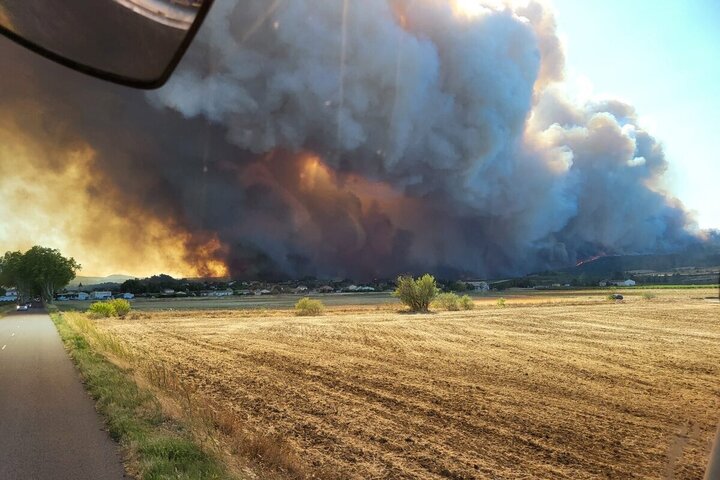

Environmental impact
The fire caused considerable damage to natural habitats, animal species, and forests. Several thousand domestic and farm animals had to be urgently evacuated, while an already fragile wild fauna—roe deer, birds of prey, and others—saw their territories reduced to nothing. Many of these species lost their habitats, food sources, and breeding areas.
The affected forests, largely composed of pine trees, holm oaks, and garrigue vegetation, suffered massive destruction. Certain endemic plant species, adapted to dry climates but unable to withstand such intense heat, were severely impacted. The soil, stripped of vegetation cover, is now vulnerable to erosion and runoff, increasing the risk of flooding and landslides during future rainfall.
Natural regeneration will be slow. In the most heavily affected areas, it will take several decades to regain a forest density comparable to that which existed before the disaster. Ecological cycles have been disrupted: the disappearance of melliferous plants deprives pollinators of resources, which in turn affects the reproduction of many plant species.
Recovery will require coordinated support from local authorities, state services, and conservation organizations. Targeted reforestation programs, the creation of wildlife refuge zones, and ecological monitoring actions will be essential to hope to restore, even partially, the lost biodiversity.
Response of authorities and support for victims
Faced with the scale of the disaster, local and regional authorities quickly activated emergency plans to assist affected populations. Temporary reception centers were set up to accommodate victims, provide food, psychological and logistical support, and meet the urgent needs of families who had lost their homes or essential belongings.
At the same time, administrative support units were deployed to facilitate procedures related to insurance claims, rehousing, and compensation.
In the longer term, reforestation and restoration projects for the affected areas are under consideration, in collaboration with volunteers, environmental associations, and forest management specialists. These initiatives aim not only to restore landscapes, but also to strengthen the resilience of ecosystems in the face of future droughts and wildfire events.
Finally, public authorities have announced strengthened awareness and training initiatives for wildfire prevention, with the goal of more actively involving residents, municipalities, and economic stakeholders in a collective approach to protection and preparedness.
Conclusion and prevention
As the Aude region tries to recover from this devastating episode, it has become more crucial than ever for all stakeholders—authorities, businesses, associations, and citizens—to work hand in hand to rebuild, protect, and prepare for the future. Preserving ecosystems and securing homes must now be considered strategic priorities, just as important as active firefighting.
In this context, and as a reminder, integrating preventive protection systems such as Hydrodome and HydroJet could transform the way high-risk areas face wildfires.
Hydrodome: a compact 360° circular spraying ramp, delivering between 3,000 and 5,000 liters per hour through multiple high-pressure nozzles. It forms a continuous water curtain around the home, intercepting embers, drastically reducing thermal radiation, and keeping surfaces below the ignition threshold thanks to evaporative cooling.
HydroJet: a system focused on protecting the ground and the roof, capable of watering a 10-meter perimeter around the house and saturating vegetation with water to slow or stop the advance of fire.
The addition of biodegradable wetting and foaming additives (Class A, fluorine-free) optimizes water retention on surfaces, slows drying, and improves thermal dissipation.
These technologies, simple to deploy and activatable within moments, act as a thermal shield and allow firefighters to concentrate their resources on the main fire front. If widely adopted in high-risk areas, they could significantly reduce the number of homes destroyed and limit human and material losses in the years to come.
The lessons learned from this disaster are clear: beyond emergency response—whether by us or by competitors—we must invest in prevention. Protecting a home before the flames arrive means protecting its inhabitants, relieving emergency services, and preserving our natural heritage. The Aude region, and all exposed regions, deserve for these solutions to become the norm rather than the exception.
Introduction
The images will remain etched in memory: plumes of smoke rising from the Corbières, a landscape torn between fire and ashes, and villages emptied of their inhabitants. Since early August, a wildfire of unprecedented scale has devastated the region: more than 16,000 hectares have gone up in flames—an area equivalent to the entire city of Paris. During certain critical hours, the fire spread so rapidly that it required the deployment of 2,000 firefighters, 500 vehicles, and a vast aerial fleet, marking the largest firefighting operation in France in decades.
As many now know, among the human losses was an elderly woman who died after refusing to leave her home (an investigation is still ongoing), a tragedy that illustrates the dilemmas faced by communities amid chaos. Nearly ten people were injured, homes were destroyed, and normal life was shattered in several municipalities. In the days following the containment of the fire, firefighters had to remain vigilant over hot spots, while a persistent heatwave and temperatures reaching 39 °C raised fears of a flare-up.
This catastrophe is a wake-up call: it reveals just how formidable Mediterranean wildfires have become—fueled by drought, wind, and climate disruption—and how urgently our prevention and protection measures must evolve.
Water spray systems and devices to prevent the spread of fires to homes.
Contact & infos
Service
contact@blazeblock.fr
© 2025. All rights reserved. BlazeBlock® is a registered trademark.




09.50.99.23.62